
I’m Back on the Electrolyte Buzz
Carbohydrate Loading Strategy
While I’ll talk about this from a bodybuilding perspective the learning still applies to anyone competing in hybrid events/endurance races.
As I mentioned a couple of weeks ago I’m deep into bodybuilding prep.
Physique “sport” is an interesting endeavour, it takes a special kind of person to stand on stage half-naked-glazed-bronze, but alas, I find myself doing it all over again anyway…
Nutrition plays a key role in bringing together the stage look. The “look”, when standing on stage, is to get as lean as possible while also still looking as muscular as possible.
Calorie restriction, for weeks on end, helps to bring body fat down so you can get “as lean as possible”. But in the last few days before competition what really brings the look together is the carb load.
Carbohydrate is stored in the muscle and every gram of stored carbohydrate (glycogen) holds with it 3g of water. If you can get the carbohydrate stored in muscle, as glycogen, this will help to create the illusion of looking “as muscular as possible” (think water balloon that’s empty vs. filled with water).
Now this is where it becomes interesting for those of you doing hybrid races and endurance events…
Getting those carbohydrates to where we want them to go (muscle) requires 3 things: Carbohydrate, water, and electrolytes.
In the past, every time I’ve carb loaded, I’ve almost solely focused on the carbohydrate aspect - which makes logical sense… But to store those carbohydrates (for when you need them, or in my case, to create the “look”), adequate hydration and adequate time are also required.
It can take 24-48 hours for your body to turn the carbohydrate you eat into stored glycogen (the goal of carbing up is to saturate the muscle of glycogen - fill up the water balloon).
If we don’t allow adequate time before an event to carb up, we risk those carbohydrates still being in the stomach and not in the muscle (ready for us to use as energy).
As for hydration, this is probably the area that I’ve been most interested in recently.
In the past I’ve looked at hydration and its direct impact on exercise, but I’ve overlooked the role of hydration in relation to muscle glycogen. Specifically during a carb load.
Electrolytes, sodium and potassium, help to maintain (muscle) cell hydration (keep your water balloon sufficiently filled with water). Sodium, primarily outside the cell, helps to push glucose into the muscle. Potassium on the other hand, primarily inside the cell, helps to lock that glucose inside to be stored (as glycogen) for later use.
What this means for the carb up process, is that you want to have a sufficient amount of electrolytes in your base diet to help support the increase in carb intake.
For the numbers people:
A baseline intake of sodium is somewhere around 2000-3000mg per day (depending on activity levels).
During a carb load, this should increase to around 3000-5000mg per day.
Potassium on the hand should stay pretty consistent at around 3000-4000mg per day.
The point of this whole post:
What I’ve noticed, while practicing, is that the increase in sodium is easy enough to achieve.
Most foods we carb-up on, breads, cereals/bars, etc. already contain salt. The more of those foods that we eat, the higher our sodium intake typically gets.
Potassium however, didn’t follow the same trend.
In fact, depending on food sources used, it can be easy for potassium to actually drop. Meaning you might be able to get glucose into the muscle, but getting it to stick is another story.
This is because the main source of dietary potassium, for most people, will be “water based foods”. Fruits, vegetables, and animal protein (meat). However, when carbohydrate loading, those are often the foods that get reduced to help ease digestion (if you’ve carb loaded before, doing so on “whole foods” isn’t fun).
What I’ve noticed, is that being more selective with the carbohydrate sources I’m using in my day-to-day diet, and having a variety of foods, rather than just more food, has been helpful in keeping potassium high before, during, and after a carb load.
Example:
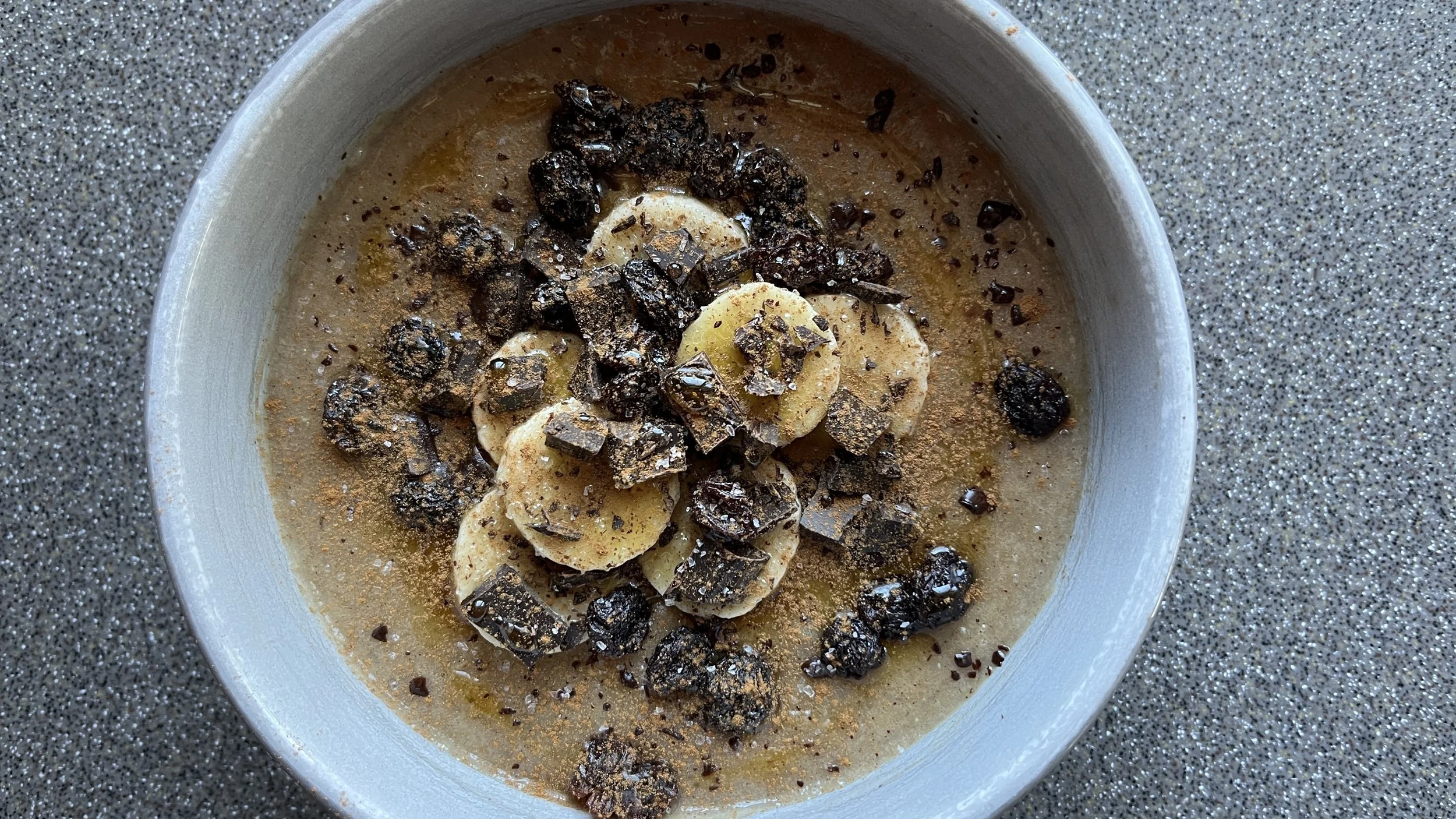
Oats + banana, or rice + raisins (rather than just more oats or more rice alone).
Swapping broccoli for spinach (to keep food volume low but potassium levels high).
As carbohydrates increase so too should sodium, but not at the expense of potassium.
I’m back on the electrolyte buzz. Only this time I’ve swapped the flavoured drinks for real food.
Note: I made a recipe to show how I’ve changed my breakfast to keep all of this in mind. Check out the Carb Load Porridge HERE